Paddock View or Trackside Walk? Two Ways to Spend a Race Visit
Choose a paddock view or trackside walk to match your race-day pace, follow the action more easily, and notice the details that make a venue distinct.
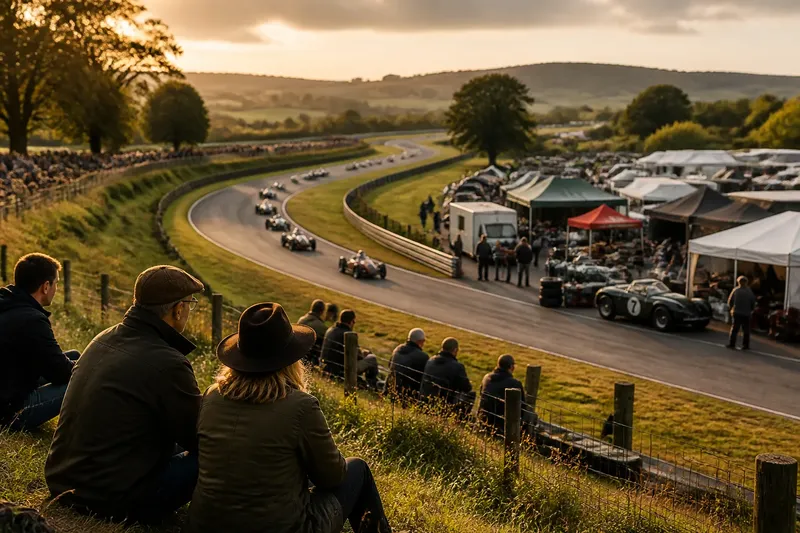
The common mistake at a countryside race meeting is to treat the first decent view as a base for the whole day. A paddock view or trackside walk offers a different kind of visit: stay put and follow the race as it unfolds, or move around and see how the circuit’s sounds, sightlines, and small rituals change from one stretch to the next. Choosing with that difference in mind can spare you a day of restlessness—or the feeling that you missed the character of the place.
A paddock view makes a race easier to follow
A fixed viewing spot gives the day a reliable center. From a bank, designated viewing area, or permitted place near the paddock, you can settle in, learn the circuit’s rhythm, and watch the same section of track each time the field comes through. The repeated view makes small changes easier to notice: a gap opening, a car taking a different line, or the crowd leaning forward as the pack approaches.
This approach suits visitors who want to keep track of one race rather than sample the venue in passing. It can also suit anyone who prefers fewer decisions during a busy day. Once you have found a comfortable, allowed place with a clear view, you can pay attention to the competition instead of continually checking where to go next.
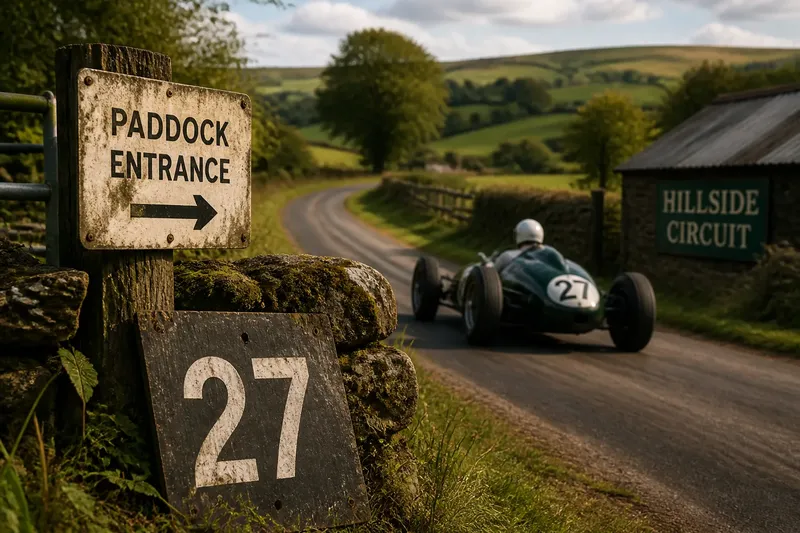
A paddock-side vantage point can add another layer, provided public access is allowed. The paddock is where machines are prepared and people gather between sessions; it is not automatically an open viewing area, and the designated spectator side may be separate from working spaces. From an approved public spot, you may notice the contrast between the stillness of a parked machine and the noise of the circuit beyond it.
Staying in one place has limits. A bend may hide most of the lap, a crowd may obscure the view, or the sound of approaching cars may make it difficult to hear a companion. A fixed position also gives you fewer chances to notice how the venue feels away from the track-facing crowd.
Choose a stable view if following the sequence matters more to you than seeing every corner.
A trackside walk reveals the venue in changing fragments
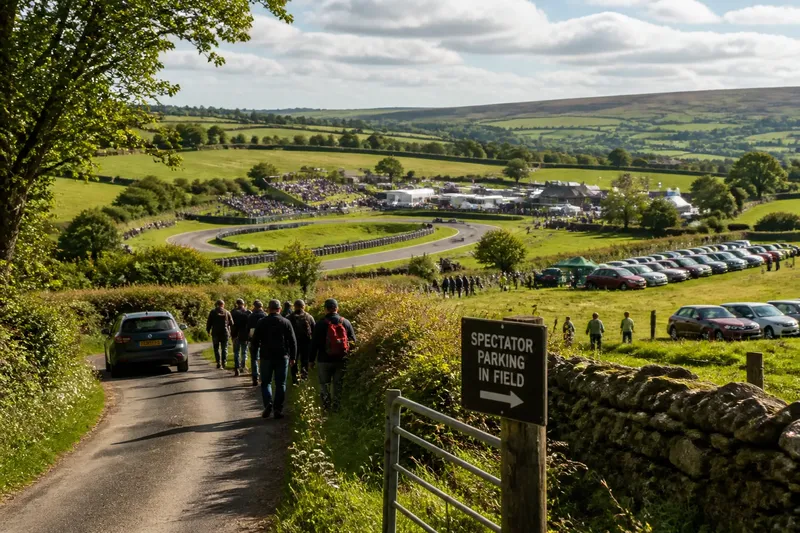
A slow circuit-side visit is less like watching one long picture and more like collecting a series of short scenes. A straight may bring the full rush of an engine note; farther along, a corner can make the crowd’s attention visible as bodies turn together. Beyond that, a quieter stretch may expose the ordinary work of a rural venue: footpaths, fencing, shelter, and the distance between one viewing point and the next.
Walking suits visitors who enjoy movement and do not mind losing the continuity of a particular race. You may reach a new viewpoint only to see the pack disappear around a bend, then catch it again from elsewhere. The reward is not a complete account of every lap but a stronger sense of how spectators, track, and surrounding land fit together.
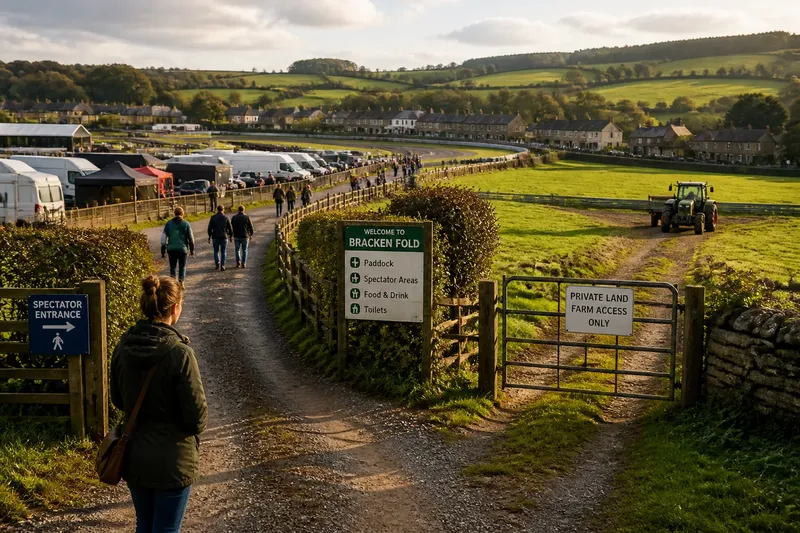
Keep the walk within public spectator routes. Circuit edges can include restricted areas, service roads, steep banks, uneven ground, and places where officials need clear access. Follow posted signs and steward instructions, and do not cross barriers to improve a view. The permitted route is part of the visit, not a puzzle to solve by finding a shortcut.
Movement can also make the day feel less predictable. A path that looks close on a venue map may be slow going on soft ground, and you may have to pause while a race or session is underway. Give yourself room to stop, watch, and move again rather than treating the walk as a race of its own.
Walk when the changing view is part of what you came to notice.
Your preferred pace matters as much as your preferred view
There is no need to choose between uninterrupted attention and movement for the entire meeting. A day can have a home base and a short circuit-side outing: watch a session from one spot, take a permitted walk during a break, then return if the next race is one you particularly want to follow. This middle course works best when you decide in advance which moments you would rather not miss.
Consider how you like to spend time outdoors. Someone who enjoys settling in with a program, listening to commentary, and watching the same corner may find a fixed view satisfying. Someone who likes to pause at different points, chat with other spectators, and take in the venue at a leisurely pace may be happier moving around.
Access needs matter, too. A fixed location can reduce the effort of covering ground, though it may still involve slopes, standing, or crowded approaches. A walk may offer more choice about where to pause, but the route can be uneven or exposed to weather. Check the venue’s access information before travelling and choose a position or route that fits your needs; ask event staff about available spectator facilities if the information is unclear.
For a family or group, compare preferences rather than assuming everyone wants the same kind of day. One person may want to keep watching the race while another is ready to explore. Agreeing on a meeting point and a time to regroup can make a split plan easier without asking anyone to hurry through a view they enjoy.
Choose a paddock view or trackside walk by asking what you want to remember
A useful choice begins with the memory you hope to take home. If you want to recall how a race developed, a consistent vantage point is likely to serve you better. If you want to remember the way a venue changes as you move through it—the shift from loud crowd to quiet path, or from paddock bustle to a distant straight—a walk may leave a richer impression.
Say you arrive at a small meeting with time for one full race and a break afterward. You decide that following the race matters most, so you pick an approved bank with a clear view of a bend and stay there for the session; during the break, you take the signed spectator path to another viewing area. You can expect to follow the same section closely, then see a different slice of the venue without having to watch the race while moving.
If the meeting is unfamiliar and you have no particular race in mind, begin with a modest commitment. Find a permitted place to pause, watch how the crowd responds to a passing field, and notice whether you are absorbed by the action or curious about what lies along the route. Your attention is a better guide than trying to see every available viewpoint.
There is also a social difference. A settled viewing area can make conversation easy because people share the same sightline and wait for the next pass. A walking visit creates brief encounters: a quick exchange on a path, a nod between people who have stopped at the same fence, then a gradual drift onward. Neither is more authentic; they simply give the day a different tempo.
What should you check before choosing your race-day route?
Can spectators enter the paddock?
Do not assume the paddock is open because it is visible from the spectator side. Check the event’s access information and follow signs and staff directions; if entry is restricted, enjoy the view from an approved public area instead.
Is there a marked path around the circuit?
Look for a spectator map, route signs, and any notices about closed sections. If a route is not open to the public, stay within the designated viewing areas rather than following a track edge or service road.
Where can you pause during a walk?
Check whether the route has suitable viewing points and places to rest, especially if you prefer not to stand for long stretches. A route with fewer stopping places may work better as a short outing than as the center of the day.
What is your plan if weather changes?
Think about shade, shelter, wet ground, and how easily you can return to your chosen spot. Conditions can change the comfort of both a fixed vantage and a walk, so keep your plan flexible and follow venue guidance.
A blended visit can keep the day from feeling one-note
Many spectators do best with a simple rhythm: settle for the session they care about, move during a natural pause, and return to a familiar place if they want to follow the next race closely. That gives the day a clear anchor without turning the rest of it into a seat you never leave. If you are visiting with others, make the pause a shared decision rather than a silent departure.
Keep any essentials compatible with the venue’s rules and the weather. A light layer, water, and footwear suited to the permitted paths can make either option more comfortable; check event guidance before bringing larger items or anything that may obstruct other spectators. Small preparations matter most when they help you stay attentive rather than distract you from the day.
At a rural circuit, the choice is not simply between watching and walking. It is a choice between building a continuous picture of the racing and letting the venue reveal itself in pieces. For a race visit you can enjoy at your own pace, choose a paddock view or trackside walk around the kind of attention you want to give—and leave enough room to change your mind when the day offers a better view.