From Route Markers to Racing Identity
See how route markers and racing numbers become part of a circuit’s identity, helping visitors read its spaces and remember the people who race there.

The common mistake is to treat a number board or direction sign as background scenery; that misses how these marks help a rural circuit become recognizable, and how removing or changing them can loosen the link between a race and its place. From route markers to racing identity, the change begins with a simple job: helping people tell one competitor, entrance, or trackside location from another.
Route markers solve immediate problems
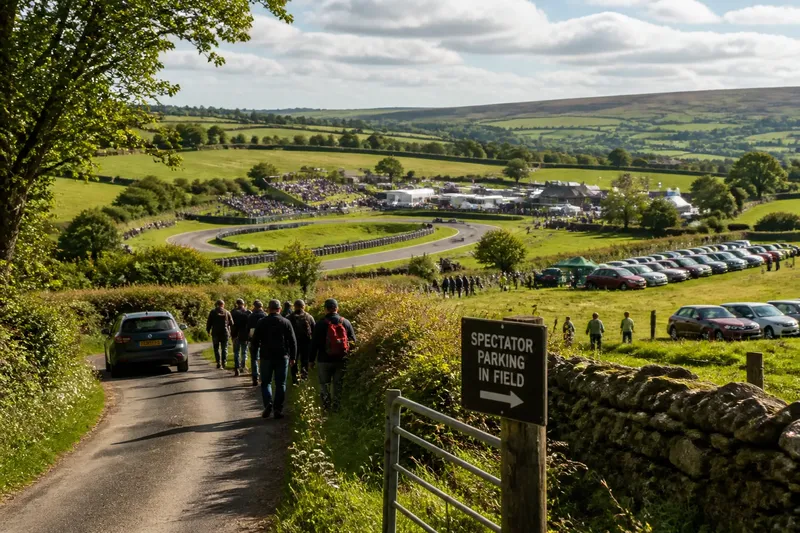
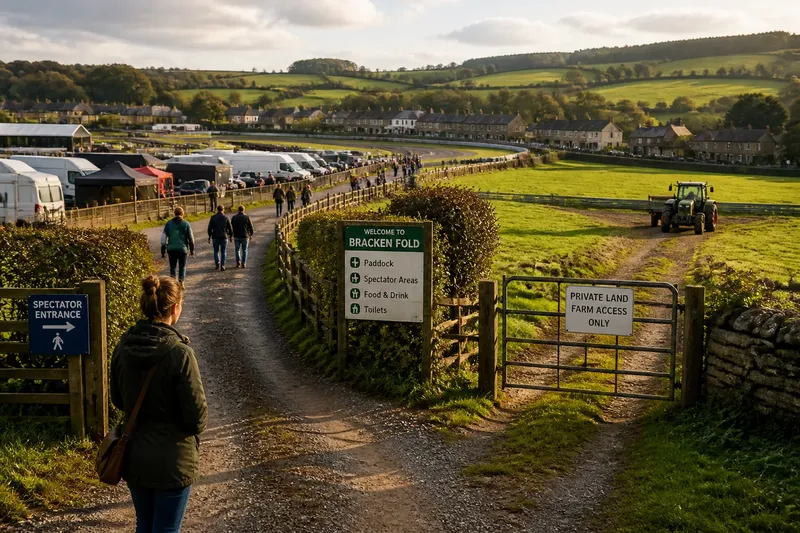
A competitor’s number makes a moving machine easier to identify. A sign at a gate, paddock lane, or course junction helps people find where they need to go. In a countryside venue, where buildings and access roads may serve ordinary farm or community purposes between events, those identifiers can make temporary racing arrangements legible.
These marks work through repetition. A number appears on a vehicle, perhaps again on an entry list or pit board; a venue name is printed on a gate sign and repeated on a program. Each appearance connects a symbol to a person or place. Visitors learn the connection as they watch, ask questions, or follow the event’s printed information.
Keep an eye on what a marker identifies: the competitor, the route, the venue, or a particular event. Similar-looking signs can serve very different purposes.
Racing numbers become familiar through use
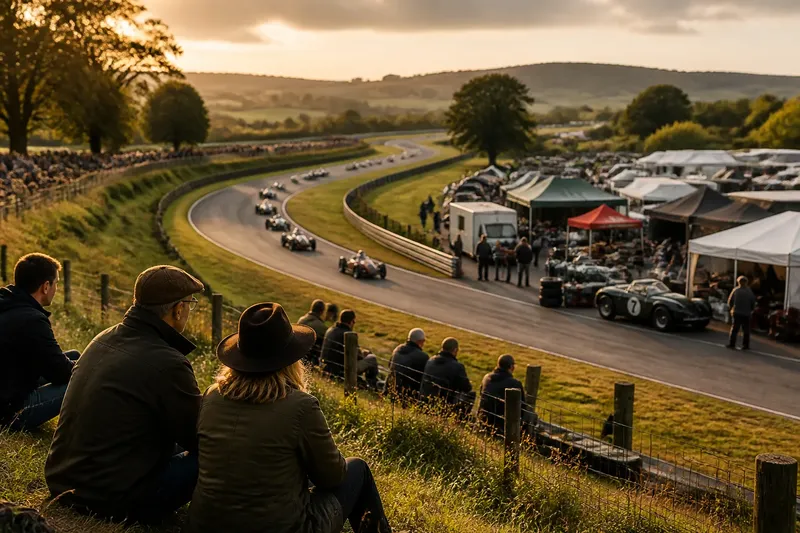
A number is useful because it is quick to read, but its cultural life comes from association. A spectator may first notice a number while trying to follow a race, then recognize it on a machine returning to the paddock. The mark begins as a practical label and gains meaning through repeated appearances in the same setting.
That meaning need not be mysterious or universal. A number may remind one visitor of a particular driver, while another remembers the sound and color of the machine carrying it. The identifier gives both memories a shared point of reference, even when people describe the race differently.
Say a small club introduces a new competitor whose car carries a number not seen at the venue before. If the number is clear on the car and appears in the program, visitors can connect the name to the vehicle during the event. At a later meeting, spotting that same number may prompt recognition before anyone reads the entry list.
Signs attach racing to a particular place
Venue signs do more than announce a destination. Their wording, placement, and weathering can make them part of how people recall arriving at a circuit. A board beside a village road, a painted name on a paddock building, or a direction marker at a field entrance can become familiar landmarks for returning visitors.
In rural settings, these signs often sit among other working features: hedges, gates, sheds, and narrow access lanes. That context gives a marker a specific character. A generic arrow can point toward an event; a locally named sign can connect that event to the surrounding community and its everyday geography.
There is a practical boundary, though. A sign that has become evocative may still need to give clear, current information. Where an identifier’s meaning or use depends on event rules, venue guidance, or local requirements, check the relevant instructions once before interpreting or reproducing it.
How do identifiers become part of racing culture?
Why do racing numbers stay in people’s memories?
Numbers are compact and easy to repeat in conversation, so they can stand in for a competitor when names are unfamiliar. Their associations grow from seeing them recur on machines, programs, and event records.
What makes a venue sign feel distinctive?
A sign feels tied to a place when its name, position, and surroundings become familiar together. A plain marker can acquire character through its setting and repeated use, without needing elaborate design.
Can a practical identifier also carry a story?
Yes. A number or sign can help someone follow an event while also calling to mind a particular machine, route, or visit. The story comes from the experiences attached to the marker, not from the symbol alone.
Why can changing an old marker matter?
A replacement may improve legibility or reflect a new event arrangement, but it can also remove a familiar visual cue. Keeping a record of the old wording or appearance can preserve context without requiring a marker to remain in use.
Repeated marks build a shared visual vocabulary
Over time, competitors and visitors learn how a venue uses its identifiers. A color may distinguish a particular entrance; a sign shape may point toward the paddock; a number may be the quickest way to refer to a car. This local visual vocabulary lets people communicate with little explanation, especially on a busy race day.
That vocabulary can also be uneven. A longtime visitor may know what an old board means, while a first-time guest sees only faded lettering. Clear, consistent identifiers make the event easier to read, while preserving older marks in photographs, programs, or displays can keep their history available to newcomers.
The useful question is not whether every sign should remain unchanged. It is which job the mark serves now, and whether its past role matters to how the venue remembers itself.
Preserving identity does not mean freezing the signs
Racing culture changes as competitors, layouts, and event arrangements change. A number can be reassigned, a gate can receive a new name, or a faded direction board can be replaced. Those decisions do not automatically erase the past; trouble arises when useful context disappears along with an obsolete marker.
A venue can keep that context in modest ways: photograph a sign before it is removed, retain an old program, or note the connection between a familiar number and a competitor in club material. These records help distinguish a marker’s practical use from the memories that gathered around it.
From route markers to racing identity, the shift happens when people repeatedly recognize a mark and connect it with a place or participant. The next time a number board or gate sign catches your eye, notice both what it tells you now and what returning visitors may see in it.