A First Visit to a Small Racing Venue: What to Notice
A first visit to a small racing venue feels easier when you know what to notice: how machines work, where crews gather, and what local details reveal.
The common mistake on a first visit to a small racing venue is to watch only the cars going by. You can leave having missed how a machine is prepared, how crews share a tight paddock, and how the circuit’s landscape shapes the racing. A first visit to a small racing venue becomes richer when you follow both the machines and the people who keep them moving.
Begin with a route that brings machines into view
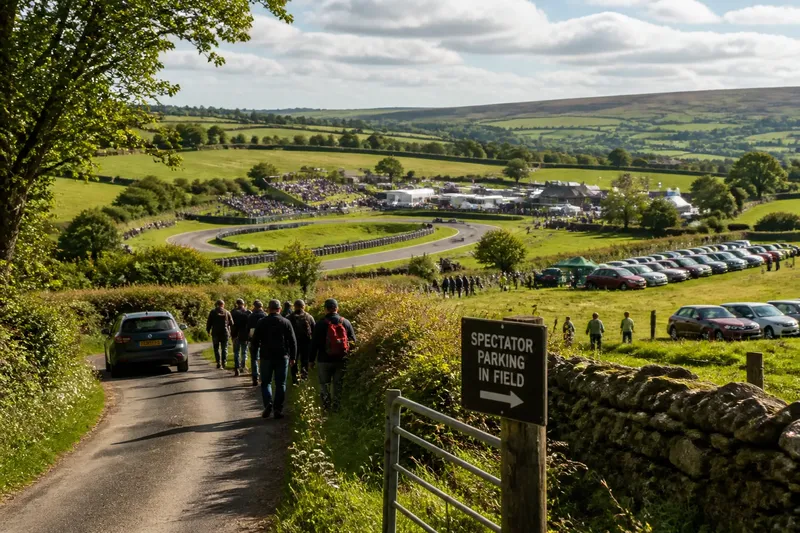
Small countryside circuits rarely separate the spectacle from the working day. A public paddock may sit beside a clubhouse, a gravel lane may lead toward the start area, and a viewing bank may overlook both the track and surrounding fields. Begin by following public signs and noting where the spectator route meets the places where cars are prepared.
- Notice the machine you can see clearly: If the public paddock is open and a car is displayed without obstructing work, look at its wheels, bodywork, and visible safety equipment; if crews are busy or access is closed, watch from the marked spectator area instead.
- Compare the stationary car with the track action: If you can safely see the same car at rest and in motion, note how its sound, stance, and movement change; if you cannot identify it, focus on one visible feature such as its color or body shape.
- Read the working routes: If a lane is marked for access or crew use, keep clear and choose another public path; if people are queuing at a narrow point, wait for space rather than pressing through.
- Look for a place to pause: If a bench or open viewing bank gives you room without blocking others, use it as a base; if it is crowded or uncomfortable, move to another signed spectator area.
- Check the day’s information: If a public schedule or noticeboard names the next session, use it to decide whether to stay near the track or visit an open public area; if details are unclear, ask staff or a volunteer when they are free.
- Notice the landscape around the circuit: If a field edge, wooded slope, or village road borders the venue, observe how the track and public routes meet it; if a boundary is marked, stay on the permitted side rather than seeking a closer view.
At every stop, follow posted directions and organizer instructions. A paddock may look informal, but it remains a working space when crews are preparing cars.
Watch what the machines reveal at rest and in motion
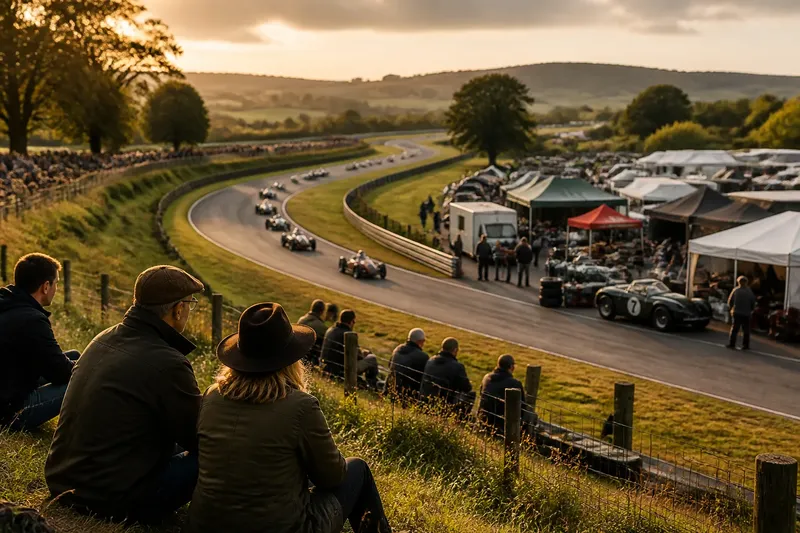
A car sitting still lets you notice details that blur during a lap: the shape of its body, its tires, the way its panels meet, or the equipment visible from a permitted viewing point. On track, attention shifts to movement—how the car settles through a bend, accelerates away, or reacts to the surface. You do not need to identify a class or technical specification to make a useful comparison.
Listen for differences without treating sound as a technical diagnosis. An engine note may rise as a car accelerates and fall as it slows, while changes in the track surface or the position of the spectator can alter what you hear. Notice what is observable, and leave mechanical explanations to someone qualified to make them.
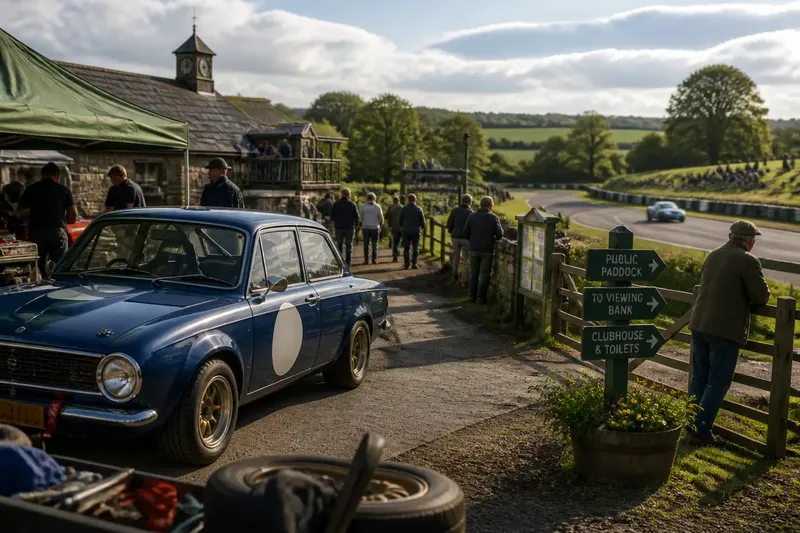
Say you arrive with a hypothetical interest in a blue saloon car and start with these invented observations: it is parked in an open public display area, its front tires are easy to see, and the event schedule lists a later session. You look at the tires without touching the car, note its blue body shape, then move to a signed spectator bank when the session begins. From there you watch for that color and compare the car’s planted stance at rest with its visible movement through a bend; the result is a clear, modest account of what you observed, not a claim about its setup or performance.
The paddock is a workshop as well as a gathering place
At a rural venue, the paddock can feel close to the audience, but proximity does not make every area public. A car may be parked beside tools, spare wheels, or a crew member preparing for the next run. Watch from an open spectator space, leave access lanes clear, and avoid touching machinery or equipment.
The human rhythm is part of the machine story. Crews may check a car, talk through a task, or move equipment while spectators gather nearby. A relaxed moment at a tea counter or clubhouse porch is better for a question than a moment when someone is working on a vehicle.
Look for visible routines rather than guessing at unseen work. If a crew member walks around a car or checks a wheel, you can note the action; you should not infer that the car is safe, ready, or mechanically sound from a glance.
The circuit’s landscape shapes its character
Notice how the track fits into its setting. A circuit beside a village road, agricultural field, or wooded slope may have a public route that bends around older buildings or temporary barriers. Those transitions show how the venue accommodates racing within a place that has its own everyday geography.
Hardstanding giving way to grass, a gate leading toward a viewing bank, or a path curling around a clubhouse can help you understand where spectators are meant to move. If a route narrows or a queue forms, pause and let people pass. The best vantage point is not worth stepping into a restricted or crowded area.
Imagine a hypothetical visitor who enters by the clubhouse, sees a queue narrowing the path to one viewing bank, and notices another signed public area nearby. They wait for the route to clear, choose the alternate area, and watch from there; the observable result is a clear view without squeezing through the crowd or crossing a crew lane.
Small details carry the venue’s racing history
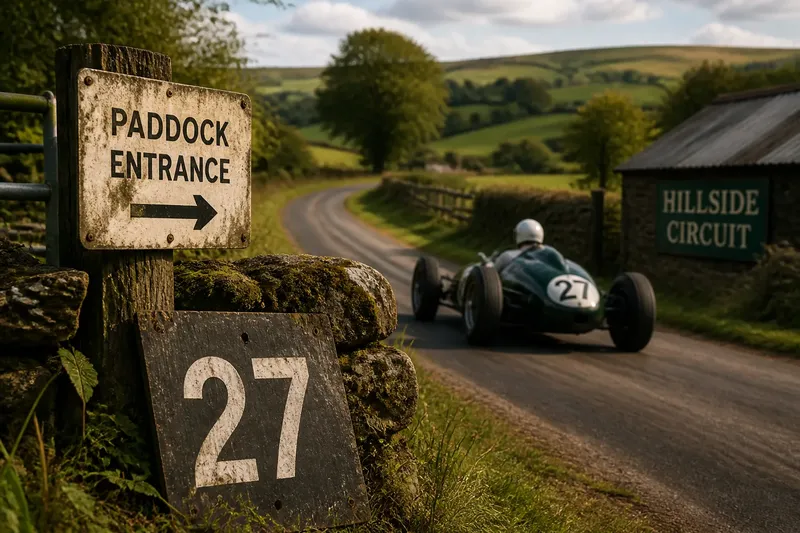
Look beyond the track for details that connect the place to its local racing life: a weathered timing hut, a hand-painted direction board, old trophies in a clubhouse cabinet, or folding chairs gathered at a familiar viewing spot. These objects do not need an elaborate story attached to them. Their position and continued use show how people inhabit the venue.
A noticeboard may explain the day’s schedule, while a worn public path points toward a popular viewing area. Together, such clues make the circuit easier to read and give context to the machines passing on track. If you want to remember what you saw, note where you entered, which public area gave you a clear view, and one machine detail you noticed without assigning it an unverified history.
Which first-visit questions help you follow the machines?
Should I start in the public paddock or at the trackside?
Start in an open public paddock if you want to look at cars at rest and the event rules allow access. Choose trackside first if you would rather watch the cars move, and follow signs to the designated spectator areas.
What machine details can a newcomer notice?
Look at visible features such as body shape, wheels, color, and movement through a bend. Avoid guessing about engine condition, setup, or safety from appearance alone.
How can I tell what is a working area?
Follow barriers, signs, staff directions, and the way access lanes are being used. If a space is unclear or crews are moving equipment, keep back and ask a volunteer when they are not occupied.
Is it all right to ask a crew member about a car?
Ask only when the person seems unoccupied, keep the question brief, and accept a short answer or no answer. For directions, schedules, or access rules, staff and volunteers are usually the more suitable source.
Leave with one useful detail for next time
A first visit does not need to cover every public path or every session. Choose a viewing area, notice one machine at rest and in motion, and pay attention to how the paddock fits into the circuit’s countryside setting. The phrase “first visit to a small racing venue” need not mean learning every technical term; it can begin with careful observation of what is visible and how the place works.
Before leaving, check the public schedule or noticeboard if you want to understand what you watched, then retrace the signed route to the entrance. A brief note about one car, one crew routine, and one feature of the landscape gives you a concrete starting point for a return visit.